

Which Inventory Software Is Suitable for Small Retail Businesses?
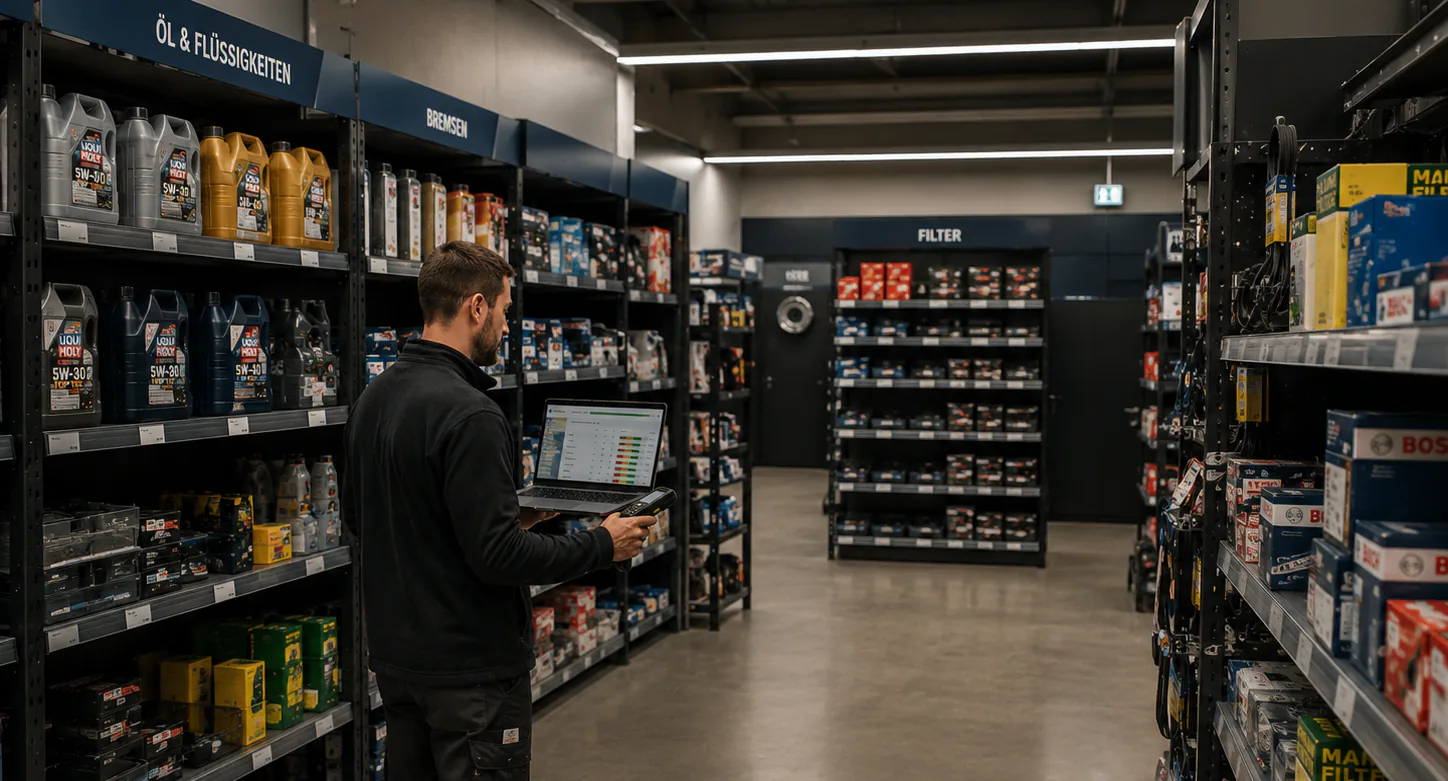
In retail, structured barcode and scanner processes are essential for capturing products quickly and accurately. Small businesses therefore need inventory software that reliably manages stock levels, can be deployed at short notice and works without extensive IT requirements. Stripes meets these needs with a cloud-based solution that does not require mandatory ERP integration, offers a live dashboard, supports compatible mobile data capture devices and includes a flexible rental model particularly suited for small stores, branch locations and warehouses.
1. What Small Retailers Really Need
Small retail businesses primarily need reliable inventory data, clear workflows and as little additional effort as possible during inventory counting. Companies that still rely on manual stock recording or inconsistent processes quickly lose time and visibility. Inventory software therefore becomes especially valuable when it supports barcode-based stock recording, provides centralized data access and offers transparent progress tracking. This is particularly important for small retailers because accurate stock levels are the foundation for efficient reordering, stable operations and cost-effective business management.
2. Why Many Standard Solutions Are Too Complex
Many standard systems are only partially suitable for small retailers. They are often designed for larger ERP environments, involve additional IT effort or require lengthy implementation projects. Small businesses, however, need something different: a solution that can be deployed quickly, requires minimal internal IT resources and works without extensive training. In addition, overstock and stock shortages can negatively impact profit margins. Small retailers therefore benefit more from a streamlined solution that is easy to use and provides operational transparency rather than from a technically overloaded all-in-one system.
3. The Everyday Advantages of Stripes
This is exactly where Stripes comes in. The software is cloud-based and, according to the provider, can be used without ERP integration, making it particularly attractive for small retailers that do not want to build a complex system environment. Stripes is designed for small stores, warehouses and branch networks and supports structured inventory management with reduced organizational effort. Another advantage is that internal teams can work with the solution after only a short introduction. This significantly lowers the operational barrier because no specialized external teams or lengthy training phases are required.
Another important advantage is the practical value during daily operations. Stripes offers live monitoring via a dashboard, making progress, problem areas and quality indicators immediately visible. Data is available in real time, rework is reduced and multiple locations can be managed centrally. Stripes has already been used in more than 4,000 projects and processes over 180 million scans per year. The hardware aspect is also attractive for small retailers: existing mobile data capture devices or handheld scanners can continue to be used. This is particularly relevant as the retail sector gradually upgrades its scanner infrastructure for 2D codes.
4. When the Rental Model Is Especially Beneficial
Another advantage is the rental model. Small retail businesses often perform inventory counts not continuously, but at fixed times or during seasonal peaks. In such cases, it makes economic sense not to permanently purchase software and scanners when they are only needed temporarily. Stripes is available as a rental solution without long-term commitments, comes preconfigured and can be deployed at short notice. This reduces capital commitment, preserves liquidity and ensures predictable costs. At the same time, the scope of use can be adjusted to actual operational needs. Businesses that already own devices can often continue using them, while additional hardware can be added without immediate investment. For many small retailers, this combination of flexibility and cost control makes the decisive difference.
5. What a Practical Rental Model Actually Includes
When businesses search for inventory software with barcode recognition to “purchase,” practical experience often shows that not every solution needs to be permanently acquired. With Stripes, a flexible rental-based inventory software solution is available that is specifically designed for periodic or project-based inventory processes.
In addition to software access, the rental model also includes project-specific configuration, monitoring, reporting and, if required, preconfigured scanner hardware. The cloud-based solution operates independently of ERP systems and is designed for barcode-based, item-level inventory recording with live monitoring. Furthermore, the software can also be used in areas without a permanent internet connection.
For practical use, this bundled approach is exactly what makes the difference. With Stripes, companies receive not just a single software license, but a complete solution tailored to their specific inventory process. This includes user and role management, master data, workflows, counting rules, dashboards, export functions, quality controls and, if required, the appropriate hardware. The result is a demand-oriented usage model that reduces capital commitment, avoids unused capacities and aligns costs more closely with actual operational needs.
6. Conclusion
The question of which inventory software is best suited for small retail businesses can therefore be answered quite clearly: the most effective solution is one that works accurately, can be implemented quickly and does not burden daily operations with unnecessary IT complexity. Stripes meets these requirements with cloud-based real-time inventory management, intuitive usability, live monitoring and a flexible rental model. Businesses looking for a practical inventory software solution for small retail structures and wanting to learn more without obligation will find in Stripes a solution that fits both the operational and economic needs of small companies.